
This crowdfunding effort raised a significant portion of the restoration budget—more than 18,000 euros in total! Major contributions were made by the Province of Limburg, the Municipality of Roermond, the Hendrik Muller Fund, the Roermond Foundation 1880, the Roermond Real Estate Society, the Friends of the Cuypershuis, and an anonymous foundation.
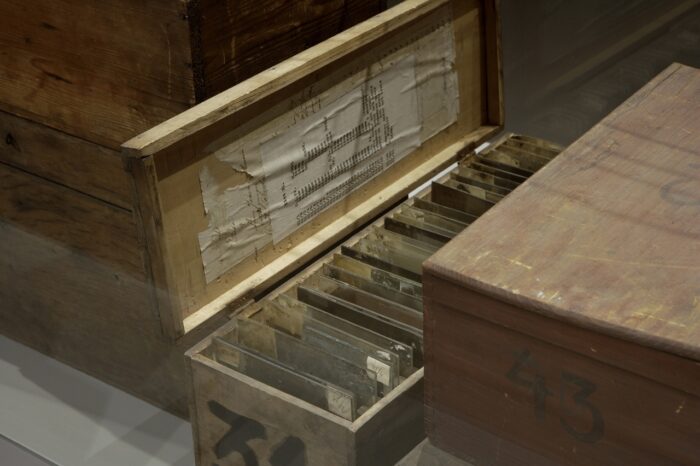
The glass negatives contain a wealth of information about the workings of the studios of architect and designer Pierre Cuypers. The Cuypershuis collaborated with the Huis voor de Kunsten Limburg to make this collection accessible. The digitization, along with the necessary conservation and restoration, ensures that this knowledge about Cuypers’ work is available to everyone.
A Treasure Trove of Information
The collection serves as important evidence of Cuypers’ forward-thinking approach. Throughout his life, he used new techniques and implemented innovations to ensure his company operated as efficiently as possible. Even more interesting is that the collection contains information about Cuypers’ workshops: the products, the employees, the working conditions—in short, the day-to-day operations of the workshops.
Cuypers as a Savvy Entrepreneur
The approximate date indicates that Cuypers was an early adopter of this new technique: photography. This underscores Cuypers’ affinity for innovation and his shrewd entrepreneurship. He used prints of the glass negatives to bring his work and his range of art objects to the public’s attention. Catalogs and flyers were intended to convince potential buyers. Photography was also a handy tool for quickly documenting a building (in need of restoration), rather than making detailed sketches.
Involvement of the Limburg House of the Arts
The Limburg House of the Arts, the provincial support organization for Limburg’s cultural sector (arts and heritage), is closely involved in the “Breng Cuypers in Beeld!” campaign. The Huis supports the museum sector in Limburg by, among other things, sharing knowledge about crowdfunding and by promoting and guiding crowdfunding campaigns. This aligns with the heritage policy of the Province of Limburg, which emphasizes collaboration, public outreach, and the digitization of collections.