Tracing Device from circa 1890
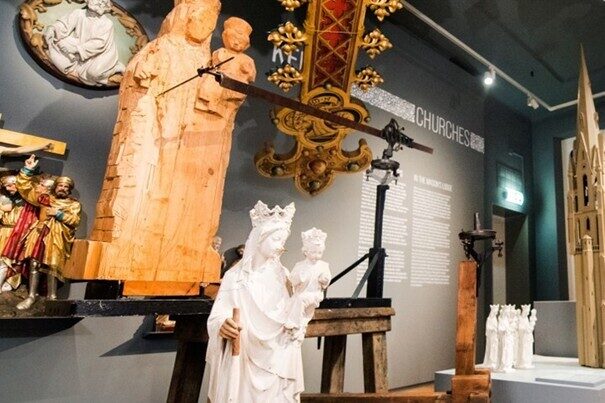
A remarkable object in the collection is the tracing device. This allowed sculptors to accurately and quickly create a 1:1 copy of a sculpture, or to reduce or enlarge it.
It is a fine example of the innovative working methods used in Cuypers’ studios, which made it possible to quickly produce countless sculptures in any desired size, material, and color. Charles Brouns, who worked as an apprentice to the sculptors from 1928 to 1933, actually used this device and recalled that Cuypers had purchased it in Leipzig.
The object consists of an adjustable metal arm with a needle at the end. The arm fits onto a swiveling and tilting base that can be mounted on a workbench or table. It can be adjusted for any desired application by rotating, tilting, extending, and retracting it, and by tightening various adjusting screws. By then moving the arm to a second base and aligning the needle with the workpiece, a copy can be made in wood or stone. The device is demonstrated in the following video.
The base of the marking device can be seen on one of the glass negatives in the Cuypershuis collection—look for the circle! The model is on the left in the photo, and the wooden slat base for the sculpture to be carved is on the right.
The marking device is now on display in the permanent exhibition at the Cuypershuis. There, it is shown alongside a plaster model on which the marking points have been applied with nails.