
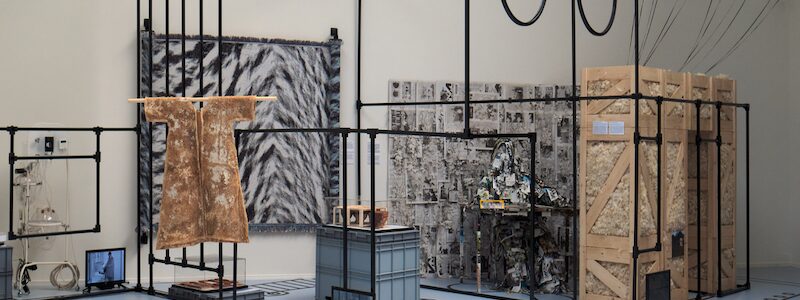
The exhibition brings together the work of Cuypers and Studio Makkink & Bey’s WaterSchool research project to tell a story about the design of our living environment. The goal of this exhibition is to raise awareness of the value of water and to show what we can do to minimize our water footprint.
What might our living environment look like if we designed it with our water footprint in mind? The exhibition offers a variety of answers to this question. You’ll see objects by contemporary artists and designers that demonstrate how the use of new biobased materials and small-scale local production leads to different forms of architecture, urban development, and a new way of living together.
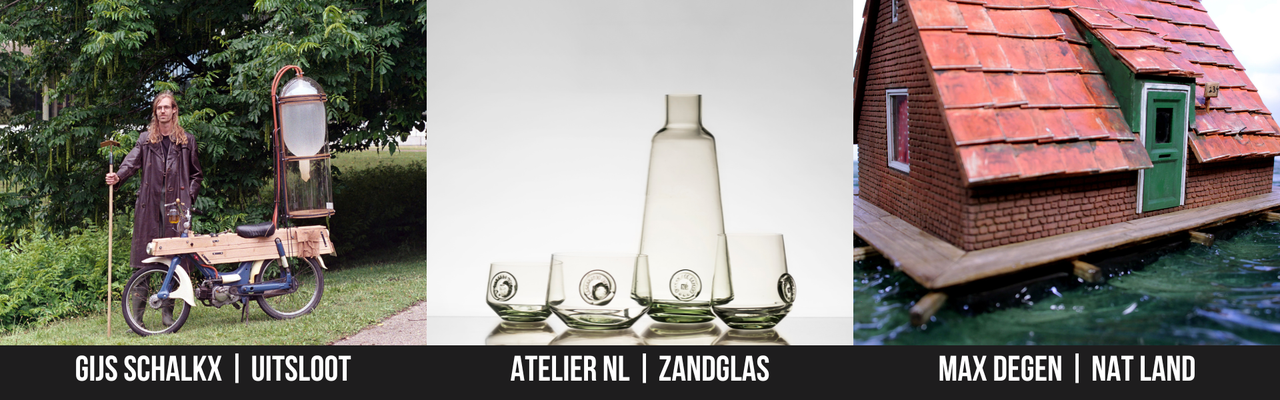
Gijs Schalkx || Uitsloot
Uitsloot presents an alternative vision of our future—a future that keeps the internal combustion engine alive and, more importantly, a future that celebrates the power of DIY and the individual influence that stems from it.
By extracting methane (swamp gas) directly from local ponds or ditches, Gijs Schalkx seeks to make us aware of the processes hidden behind the scenes of our lives and the infrastructures that sustain us.
Atelier NL || ZandGlas
For the exhibition *WaterSpiegelingen*, Atelier NL has created a special edition of the ZandGlas tableware collection, using sand from sites in Roermond shaped by the rivers Maas, Roer, and Swalm. The series highlights the origins of these rivers and current challenges such as flooding and drought. The region struggles with flooding caused by rain and downpours, while the higher-lying sandy soils face drought, which threatens natural ecosystems.
The use of this sand in the tableware highlights the vulnerability of the natural environment and the importance of sustainable water management. The ZandGlas tableware also reflects the beauty and dynamic interplay between water and land in Roermond, inviting reflection on these themes.
Max Degen || Wet Land
The “Nat Land” project is a creative exploration of the challenges the Netherlands faces as a result of climate change. The project consists of a stop-motion film and two objects that illustrate the story of someone in the Netherlands adapting to a future in which water plays a more prominent role in the Dutch landscape.
These are just a few examples of the many projects that will be on display in the exhibition. All works in the exhibition represent a sustainable, circular, and self-regenerating learning environment designed to address today’s ecological challenges and demonstrate that it is possible to develop a new culture.
Studio Makkink & Bey || WaterSchool
Studio Makkink & Bey—curator and designer of the exhibition—is a multidisciplinary design firm based in Rotterdam’s M4H makers’ district and was founded in 2002 by architect and designer Rianne Makkink and designer Jurgen Bey.
WaterSchool—a self-initiated project by Studio Makkink & Bey—is a speculative school designed and organized around water as an essential material, subject, and social and political phenomenon. In the context of exhibitions, Studio Makkink & Bey acts as a curator and invites emerging artists and designers to present their work in thematic exhibitions and lecture series. By working within a speculative framework, Studio Makkink & Bey envisions a future in which art and design are more fully integrated into education and life in general.
WaterSchool is shown all over the world—from Dubai to Milan, from Taipei to Roermond. Grounded in a shared concept and vision, each exhibition is adapted to its specific context and location, making every exhibition unique.
“Let’s not forget that we can also tackle everything with joy. Not everything has to be approached as a problem; we can also find forms that are enjoyable to create. That’s a different way of working with change, rather than debating and trying to convince others of what’s best. Sometimes you just have to get started and let yourself be guided by what happens and what becomes possible. The exhibition *WaterSpiegelingen* demonstrates exactly that.” – Jurgen Bey